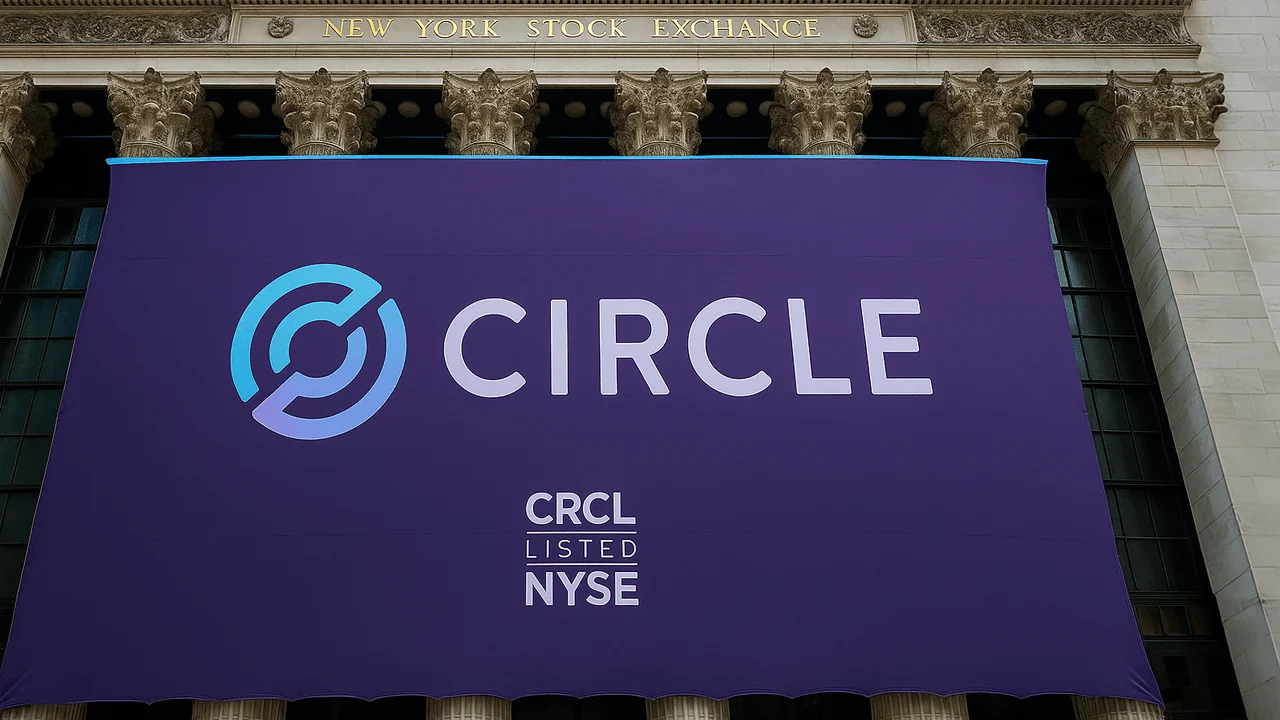
The crypto equity market was hit by a wave of volatility as shares related to Circle (the issuer of the USDC stablecoin) plummeted by 20% on March 24. The sell-off was triggered by concerns regarding the U.S. Clarity Act. However, experts from Bitwise and 10x Research are calling for calm, suggesting the market’s reaction is overblown and that USDC’s long-term prospects remain undervalued.
The Clarity Act: What’s the Catch?
The catalyst for the sell-off was the final draft of the bill, which reportedly includes a ban on interest payments to stablecoin holders simply for holding the asset.
Bitwise CIO Matt Hougan argues that investors are misreading the situation:
“The market reaction is an overstatement. Interest income has never been the primary driver of the stablecoin sector. The vast majority of these assets are currently held in ways that don’t pay interest to the holders, and nothing in the Clarity Act news fundamentally changes that.”
Furthermore, Bitwise maintains a “bullish” outlook, forecasting that USDC’s market capitalization could climb to $75 billion.
Coinbase, Not Circle, in the Crosshairs
An intriguing take comes from Markus Thielen, founder of 10x Research. He suggests that the market is looking at the wrong target: the new regulations hit Coinbase’s distribution model much harder than Circle’s infrastructure.
The Current Revenue Model:
- Coinbase captures the lion’s share of interest income from USDC held on its platform.
- For assets held off-platform, revenue is split roughly 50/50 between Circle and Coinbase.
- Circle pays Coinbase over $900 million annually—nearly half of its total profit.
If regulators prohibit yield-like payments on balances, Coinbase stands to lose one of its highest-margin revenue streams. For Circle, however, a shift toward strict federal regulation could be a net positive, as it pushes out less transparent competitors.
Innovators vs. Banking Giants
Some critics worry that “heavyweights” like Bank of America, Wells Fargo, or Stripe will eventually launch their own stablecoins and cannibalize Circle’s market share.
Matt Hougan remains skeptical of this “banking takeover” theory. He points out that in the history of fintech, early innovators have been remarkably successful at defending their market dominance even when traditional financial giants enter the fray.
Competitor Woes: Tether’s Audit and the Sanctions Ghost
While Circle navigates the U.S. legislative landscape, its main rival—Tether (USDT)—is attempting to clean up its reputation. The company recently engaged a “Big Four” auditor for a full review of its reserves. Previously, Tether only provided “attestations,” which fell short of regulatory demands.
However, analysts at William Blair believe an audit won’t be a “silver bullet” for Tether in the U.S.:
- Regulatory Barriers: The primary obstacle remains the illicit use of USDT, which will inevitably draw the attention of U.S. regulators.
- Local Manuvers: In an attempt to secure a foothold in the U.S. jurisdiction, Tether launched USAT, a stablecoin specifically for the local market, though its regulatory status remains murky.
The Bottom Line
Despite the recent dip in stock prices, experts agree that establishing clear “rules of the road” (even with yield restrictions) clears the path for large-scale players with robust balance sheets. In this race, Circle—with its transparent structure and regulatory alignment—may end up in a much stronger position than its offshore competitors.