The Ethereum community is discussing a radical idea: requiring validators to allocate a portion of their staking rewards to support the blockchain’s infrastructure. The new Validator Redirected Revenue initiative aims to solve the chronic underfunding of “public goods” and restructure the network’s economy.
What Is the Essence of the Initiative?
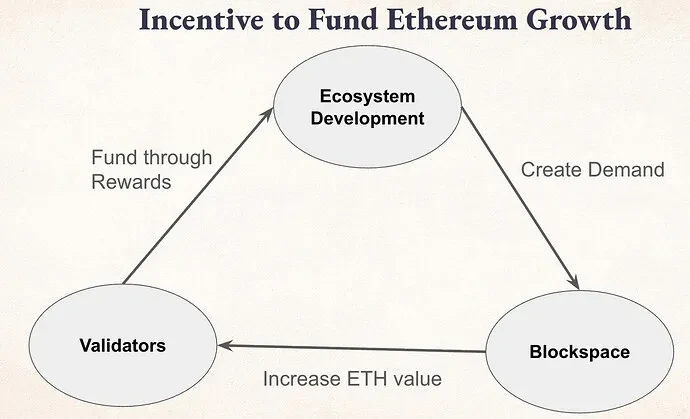
A proposal was published on the Ethereum Research forum that could seriously change the rules of the game for node operators. The authors suggest a hard fork to implement a mechanism at the protocol level that redirects up to 10% of staking rewards to fund ecosystem development.
A key feature of the mechanism is its democratic approach: if 51% of validators vote to set the redirection rate above 0%, this rule automatically becomes mandatory for absolutely all staking participants.
The Math of the Proposal: What Amounts Are We Talking About?
To understand the scale of potential changes, one only needs to look at the current network statistics:
| Metric | Value |
| Total ETH in Staking | 35M – 40M ETH |
| Current Average Yield | ~1.91% annually |
| Total Annual Validator Income | ~700,000 ETH |
| Potential Ecosystem Budget Collections (at 5–10%) | 50,000 – 70,000 ETH per year |
If implemented, redirecting even a small portion of income would secure a substantial annual development budget for the protocol.
How Will the Collected Funds Be Distributed?
Budget management is proposed to be handled by a specialized distributor contract. Validators will be able to independently specify recipient addresses (e.g., grant funds or specific development teams) and set funding proportions. These preferences will be hardcoded at the execution layer.
The system is designed to be highly dynamic:
- Frequent Updates: Every 128 blocks (approximately every 5 minutes), the network will be ready to accept a new budget distribution proposal.
- “King of the Hill” Model: The priority option is selected through pairwise comparison of alternatives. The recipient list that best aligns with the preferences of the majority of validators at any given time remains active.
Pitfalls and Risks
The authors do not hide that such an economic model carries certain threats that require careful study:
- Threat of “Cartelization”: Since about 90% of all coins are locked through large operators and pools (such as Lido or crypto exchanges) rather than solo validators, there is a risk of collusion. Major players could coordinate to monopolize recipient lists while pushing the rate up to the maximum 10%.
- Conflict of Interest: A clear contradiction arises between the goals of staking operators (who want to maximize net income) and regular ETH holders.
- Excessive Emission: Changes in reward distribution could create unwanted pressure on the asset’s overall tokenomics.
Why Is This Needed and the “Free Rider” Problem
According to the authors, the main goal of their publication is not to push a specific mechanism, but to launch a broad discussion on systemic underfunding. Infrastructure, research, security audits, and developer tools are needed by all market participants. However, it is not profitable for individual players to pay for them alone while others enjoy the results for free.
“Everyone benefits from collective improvements, but no single participant wants to pay when others can enjoy the benefits for free. This creates ongoing efficiency losses that weaken Ethereum’s long-term competitiveness.”
Today, this structural financial burden is often borne by the Ethereum Foundation, private donors, or fragmented teams. The authors warn of a vicious cycle: community concerns about future funding shortages lower expectations for Ethereum’s success, which directly pressures the overall valuation and drives down the market price of ETH.
Whether the Validator Redirected Revenue concept can break this cycle remains to be seen through community reaction and further discussions on developer forums.