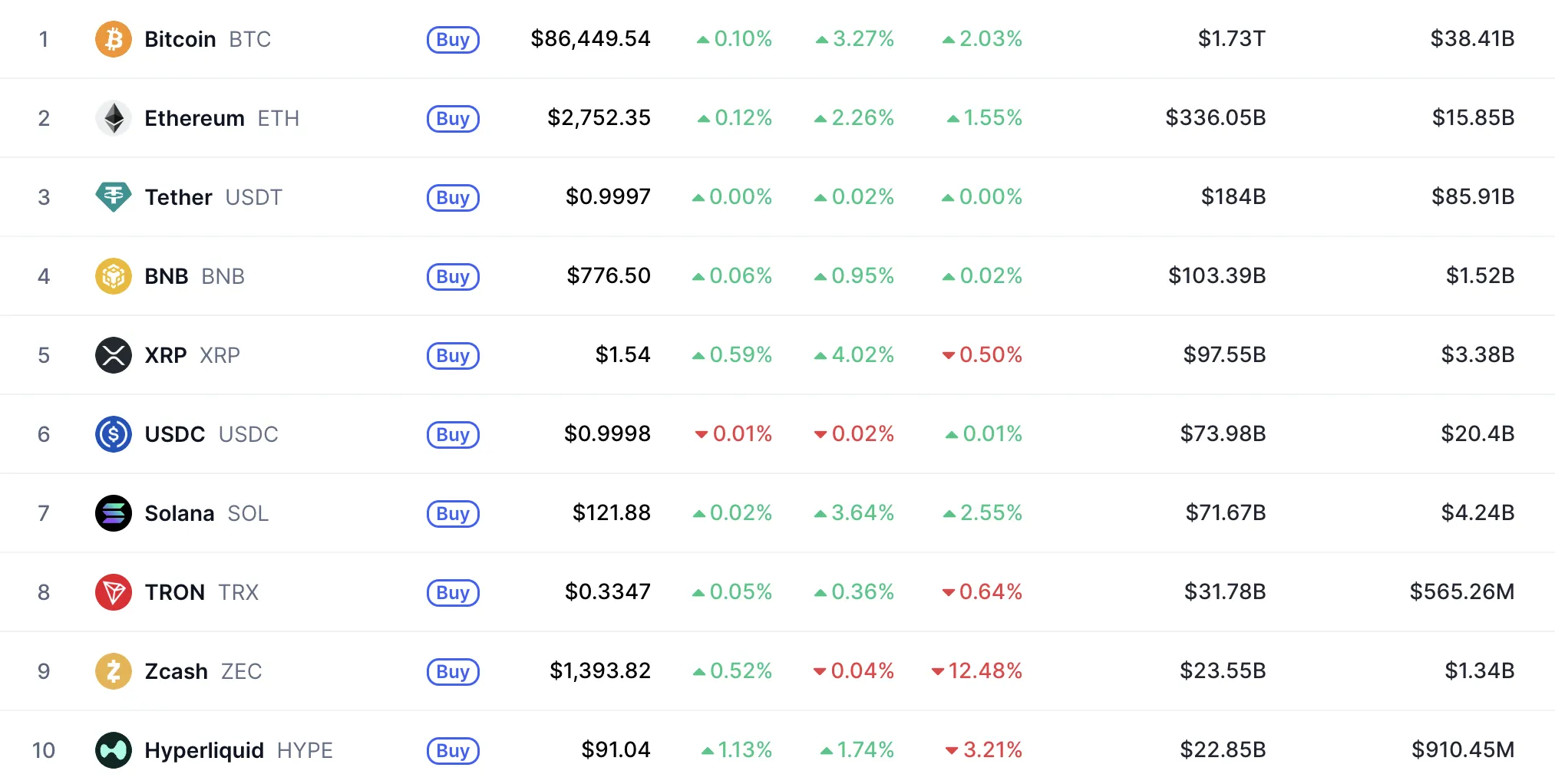
- Bitcoin broke through a heavy sell-wall to reach a local high of $86,913.
- Bitcoin’s market dominance approached 60%.
- A wave of short squeezes triggered $333 million in market liquidations.
- Institutional investors returned as spot ETFs recorded net inflows once again.
On October 2, the primary cryptocurrency demonstrated a strong rally, breaking through a dense “wall” of sellers at the $85,500 level. At its peak, quotations reached $86,913—a high since September 23.
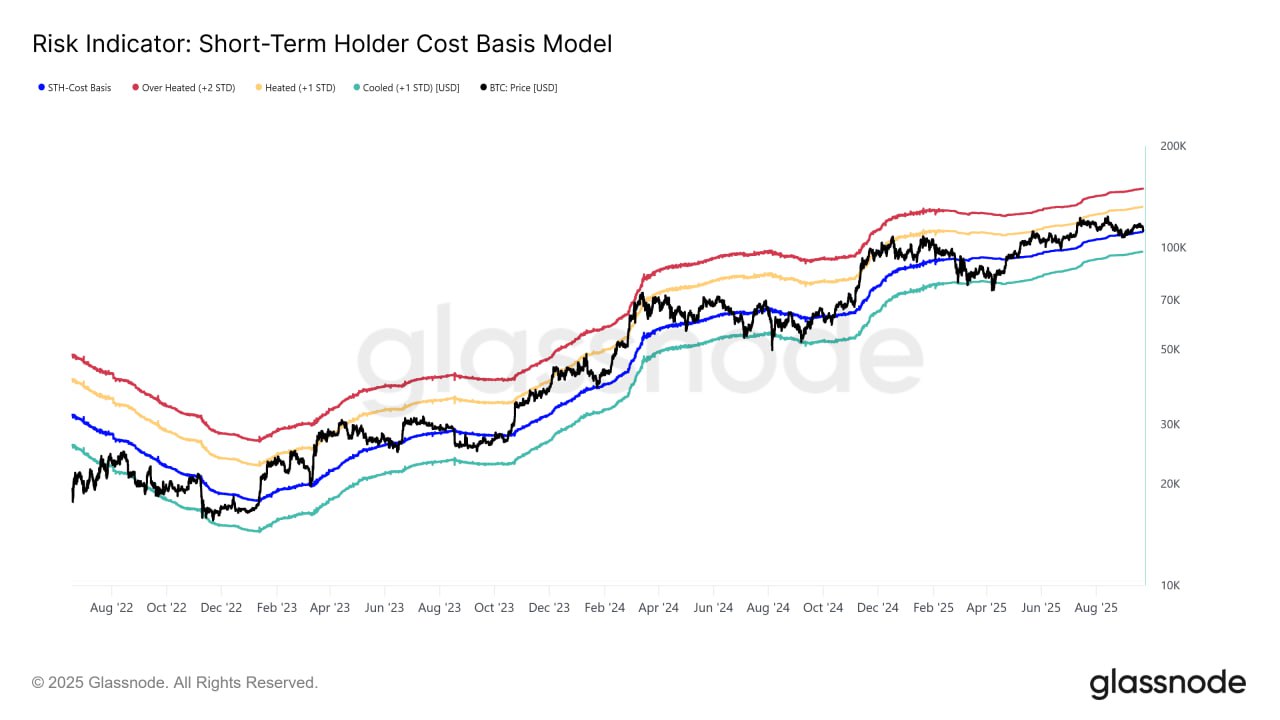
Prior to this breakout, according to a report by QCP analysts, Bitcoin had been consolidating mostly in a narrow range of $82,500–$85,700. From its local low on September 15 ($74,968), the asset gained an impressive 14.6%. At the time of publication, the price had corrected slightly and was trading around $86,400.
Market Revival: Altcoins Green Up as Investors Shift Away from Cash
The positive momentum extended across the broader crypto market. Top altcoins, including Ethereum, Solana, BNB, and XRP, also traded in the green zone.
An interesting trend emerged in market share distribution:
- BTC Dominance approached 60%.
- USDT Dominance dropped to approximately 6.3%.
CoinDesk analysts interpret this dynamic as a clear sign that investors are shifting capital out of cash and stablecoins into crypto assets, signaling a growing appetite for risk.
How Buyers Broke the $85,000 Sell Wall
Glassnode had previously recorded a large cluster of sell orders around $85,000–$85,500 on the Binance spot market. Throughout the week, this cluster acted as a heavy ceiling, capping Bitcoin’s upside movement.
However, on October 2, buyers breached this region. Following the breakout, analysts noted that sell order volume above the current price shrank significantly as sellers pulled part of their orders. According to CoinGlass data, the upward movement formed a new liquidation cluster above $87,300.
Technical Landscape According to QCP:
- Immediate Resistance: $87,400 (September high).
- Next Target: $90,000 (where a massive volume of options is concentrated).
- Key Support: $82,500 (price held this level three times over the past week).
The rapid rally proved costly for bears: total crypto market liquidations hit $333 million over 24 hours, with $244 million stemming from short positions.
Derivatives and ETFs: Capital Bets on Further Upside
Derivatives markets responded to the price action with a surge in activity. According to CoinGlass, Bitcoin futures open interest jumped by 27,000 BTC since late September, reaching 653,000 BTC (roughly $56.2 billion).
The annualized funding rate for perpetual futures held at 5.4% (reaching 9–10% on platforms like Hyperliquid and OKX). This indicates that long position holders are paying shorts to keep positions open. However, QCP noted that the current rally is driven primarily by spot buying rather than excessive leverage.
In the options market, intrigue is building around the $90,000 strike. A major participant executed a large rotation: selling over 4,000 call options expiring in late October worth $346 million, while buying calls at the same strike expiring in late November—a period covering the US elections, the Treasury’s quarterly refunding, and the December Fed meeting.
Meanwhile, spot ETFs returned to net inflows. After a $148.7 million outflow the previous day, US spot Bitcoin ETFs attracted $102.7 million on October 1. QCP views this as further proof that the rally is supported by real capital inflows and positioning.
Macro Outlook: Bitcoin Decouples from Traditional Signals
Interestingly, Bitcoin rallied despite a sell-off in US Treasuries. Yields on 10-year US bonds briefly hit 5.29%, while 30-year yields reached 5.62%. Typically, rising yields weigh on risk assets, but the flagship crypto showed remarkable resilience. Experts attribute this to new regulatory catalysts and an improved technical setup.
Focus Shifts to the US Jobs Report: The next key driver of volatility will be the September US non-farm payrolls report.
Analyst Expectations:
- Non-farm payroll growth: 84,000–93,000 (down from 162,000 in August).
- Unemployment rate: Expected to hold steady at 4.1%.
- Average hourly earnings growth: Expected to slow to 3.0% YoY (lowest since May 2021).
Slower wage growth could ease pressure on long-term Treasury yields, giving Bitcoin additional room to maneuver. Conversely, stronger-than-expected data could revive fears of a Fed rate hike in December.