Hardware wallet manufacturer Ledger has made a major move at the intersection of Web3 and Artificial Intelligence by opening public access to Agent Stack—a suite of tools designed to enable AI agents to interact with crypto wallets. This initiative aims to solve a fundamental challenge of the future: how to allow autonomous AI agents to securely interact with blockchain infrastructure without putting user funds at risk.
Below, we break down how this new technology works, which networks it supports, and the company’s AI security roadmap for 2026.
Security Philosophy: Humans Retain Ultimate Control
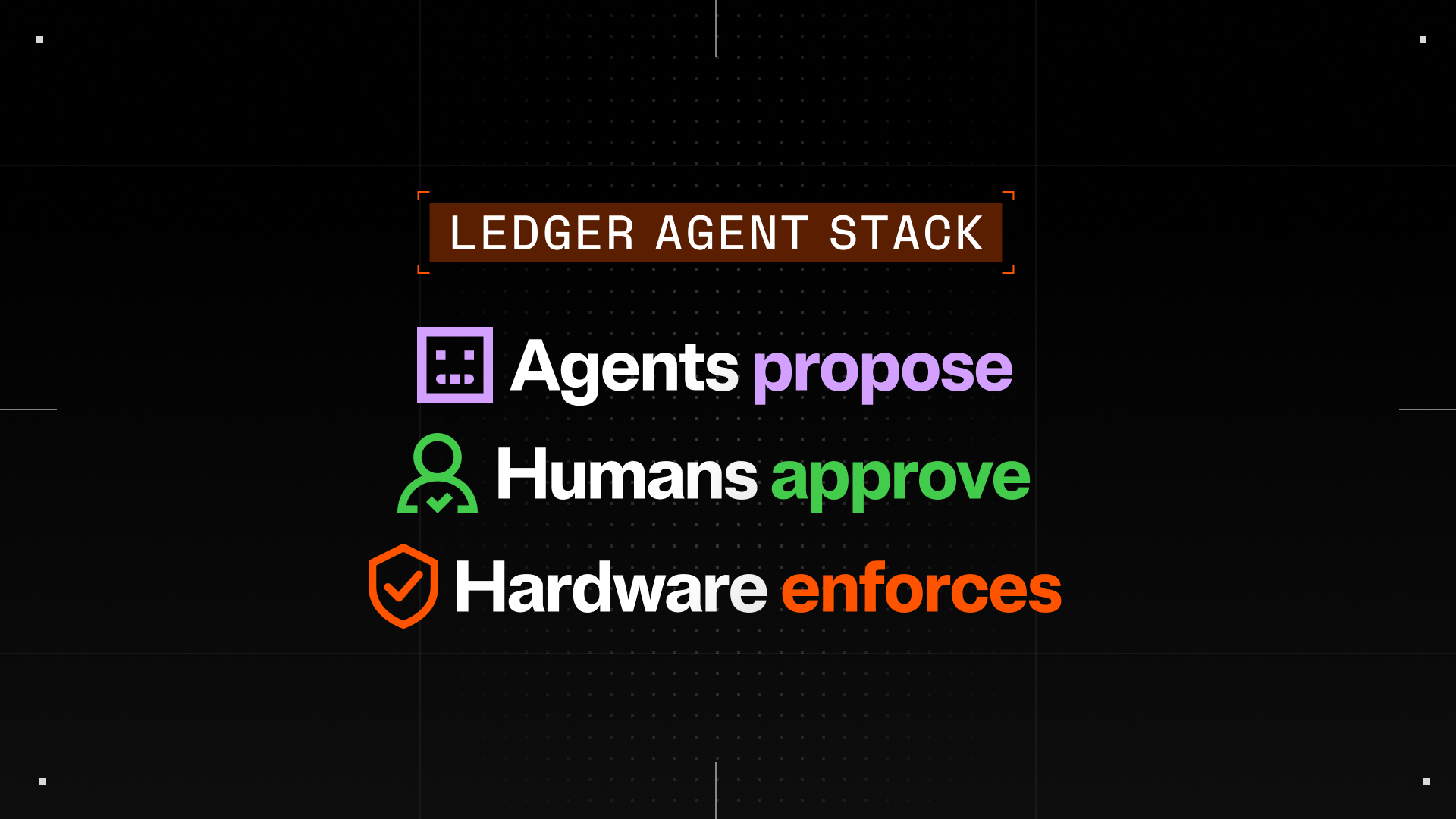
Ledger developers successfully completed closed beta testing of the Agent Stack, which involved over 1,000 autonomous agents. The company describes the project’s core concept with a simple formula:
“Agents propose, humans confirm, the Ledger device executes.”
This means the AI assistant can handle all the routine analytical work without ever having direct access to private keys.
- What the AI can do without the device: analyze investment portfolios, check balances, review transaction histories, and prepare transaction drafts to send assets.
- What requires physical confirmation: any transfer of funds or action requiring a cryptographic signature. To complete the operation, the user must physically press buttons on their Ledger device after verifying the details on the wallet’s screen.
Agent Stack Architecture and Supported Networks
The toolset is designed for both individual developers and enterprises. It includes:
- Device Management Kit Skills – A core kit for integrating device management features;
- Ledger Wallet CLI – A command-line interface that allows an AI or user to query account data, check balances, and prepare transactions;
- Ledger Enterprise CLI and Ledger Enterprise Multisig CLI – Specialized tools for businesses and multi-signature setups.
At launch, the Ledger Wallet CLI supports major blockchain ecosystems: Bitcoin, Ethereum (and other EVM-compatible networks), as well as Solana.
Beyond Crypto: Ledger as a Universal Security Key
The developers also propose using hardware devices beyond digital asset management for everyday cybersecurity:
- Via OpenPGP: Ledger can act as an isolated storage for encryption keys used for files, environment variables, and API tokens.
- Via FIDO2: The device can serve as a physical two-factor authentication (2FA) security key to log into popular platforms like GitHub, npm, Discord, 1Password, and others.
Ledger’s AI Security Roadmap for 2026
The release of Agent Stack is only the first phase of the company’s global security strategy in the age of AI. Ledger’s plans for this year include:
| Timeline | Key Developments |
| Q2 2026 | Launch of specialized identification tools and CLI functional expansion. |
| Q3 2026 | Implementation of Agent Intents and Agent Policies layers to configure rules, limits, and action scenarios for AI assistants. |
| Q4 2026 | Integration of a Proof of Human defense mechanism to protect against unauthorized actions by bots. |
Other Updates: Tangem Vulnerability and IPO Status
In addition to launching new software, the French brand continues to make headlines in the security and financial space:
- Competitors’ Security Under Scrutiny: Baptiste Boileau, a security researcher from Ledger’s Donjon team, disclosed a critical vulnerability in Tangem hardware wallets. Using a laser fault injection attack, the specialist was able to reset the card’s passcode and gain control of the stored assets.
- Financial Plans on Pause: Earlier, reports (citing CoinDesk sources) indicated that Ledger postponed its Initial Public Offering (IPO) indefinitely due to challenging market conditions.