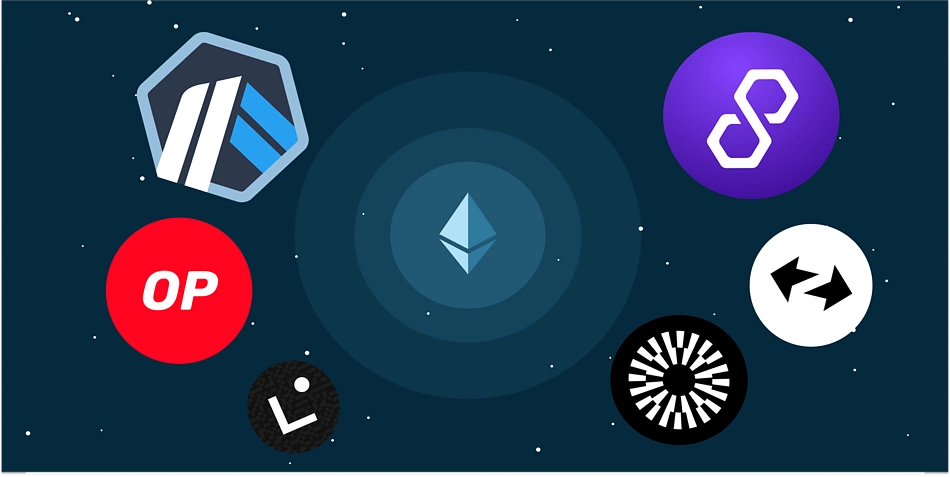
The Ethereum ecosystem is entering a new stage of evolution. Gnosis and Zisk, with the support of the Ethereum Foundation (EF), have introduced an ambitious framework: the Ethereum Economic Zone (EEZ). The project is designed to tackle the primary challenge facing modern Layer 2 networks: the excessive fragmentation of liquidity and user experience.
Ending Rollout “Isolation”
In recent years, dozens of L2 solutions have successfully increased throughput, but at a cost. Liquidity and user activity have become trapped within isolated environments, forcing developers to duplicate infrastructure and users to rely on complex, often risky cross-chain bridges.
The Ethereum Economic Zone proposes a fundamentally different approach:
- Shared Infrastructure: Applications can share services across different rollups.
- Unified Settlement Layer: All final transactions continue to be settled on the Ethereum base layer.
- ETH as Gas: Within the EEZ, Ether remains the default native asset for transaction fees.
- Seamless Interaction: By reducing the need for cross-chain transfers, the framework simplifies the overall ecosystem experience.
The EEZ Alliance: Who is Behind the Initiative?
To coordinate standards and support implementation, the EEZ Alliance is being established. The organization will be registered in Switzerland as a non-profit entity, and all software will be released as open-source.
The alliance’s founding members include industry heavyweights:
- DeFi protocol Aave;
- Major block builders Titan and Beaver Build;
- RWA platform Centrifuge;
- Tokenized stock project xStocks.
Detailed technical specifications and performance metrics are expected to be released in the coming weeks.
A Strategic Shift for the Ethereum Foundation
The EF’s decision to co-fund the EEZ is particularly notable given the foundation’s recent transition to a leaner financial model. In mid-2025, the organization tightened its belt, pausing grant programs to keep annual spending within a 5% limit.
However, the EEZ fits perfectly into the EF’s updated “proactive roadmap.” In February 2026, Vitalik Buterin stated that the original vision for Layer 2 solutions had become outdated. The focus has now shifted toward interoperability and ensuring that L2s offer unique, differentiated features rather than just redundant capacity.
Active Staking as a Funding Source
Alongside these architectural reforms, the Ethereum Foundation is evolving its treasury management. According to Arkham, the foundation is aggressively increasing its staked ETH to generate sustainable revenue.
- March 30, 2026: The EF locked an additional 22,517 ETH (approx. $46.2 million).
- Current Holdings: The foundation now manages 147,471 ETH (valued at roughly $301 million).
- Long-term Goal: The EF previously announced plans to stake a total of 70,000 ETH from its reserves, using the yields to fund ecosystem development.
Summary
The creation of the Ethereum Economic Zone is an attempt to transform a scattered collection of blockchains into a single, cohesive economic organism. If the EEZ Alliance succeeds, interacting with L2 networks will become as seamless for the end-user as staying on a single chain, all while maintaining the security of the Ethereum mainnet.