Short answer: A rug pull is a crypto exit scam: promoters attract buyers, then take investors’ funds. The US Financial Stability Oversight Council (FSOC) describes mechanisms including sudden liquidity withdrawals, hidden selling restrictions and malicious contract backdoors. Before buying, investigate who controls the funds and whether holders can sell. FSOC report.
Checked: 21 November 2026
This guide explains the mechanics, warning signs and public checks. The checklist below is a research aid, not a fraud verdict or a recommendation to buy. Some sources are exchange-published education, so they reflect a commercial context and are not independent safety ratings.
What is a rug pull in crypto?
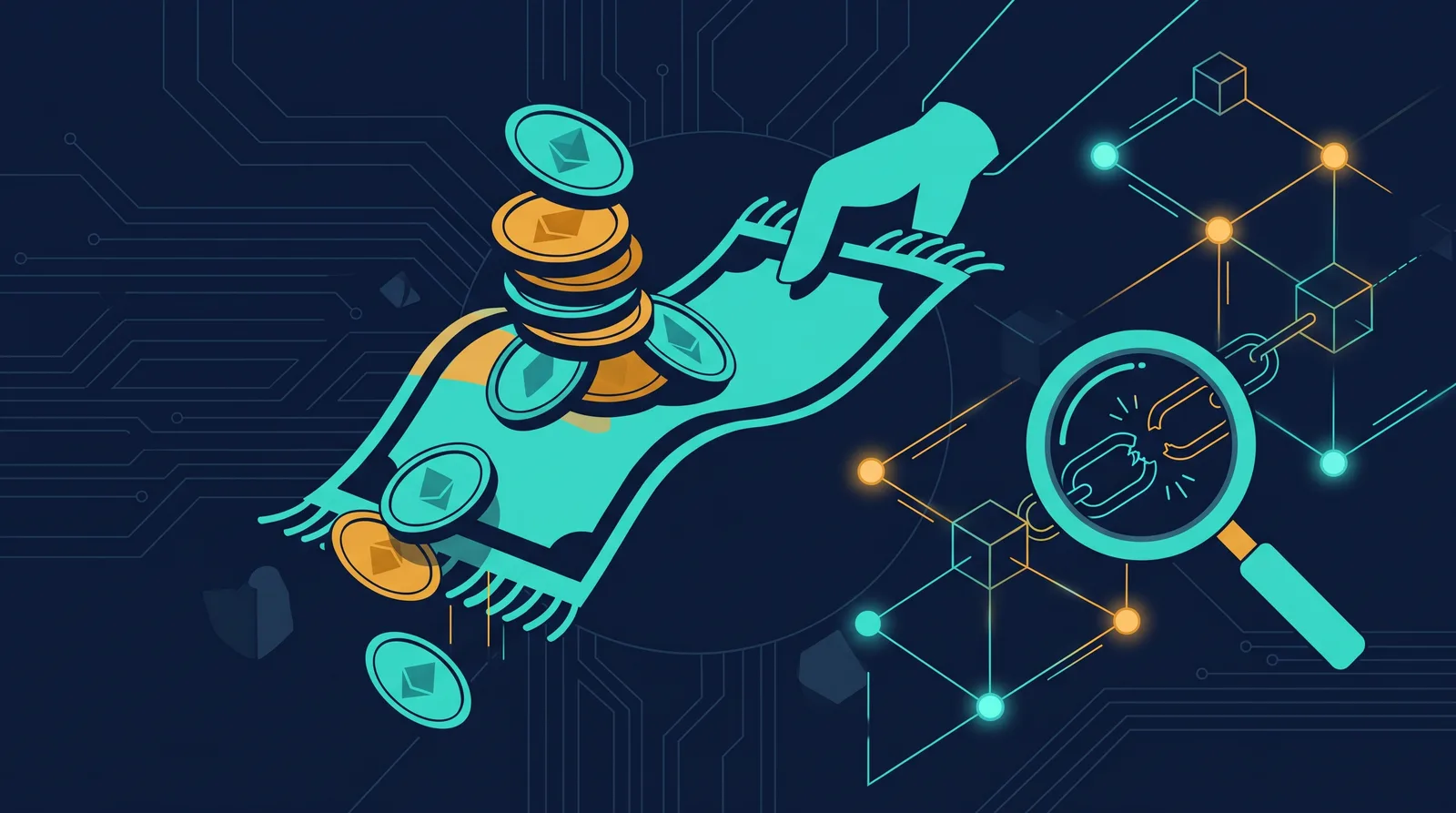
FSOC calls rug pulls a type of exit scam in which a promoted crypto project attracts funds before scammers disappear with them. Its report describes creators abruptly withdrawing their contributions from a trading pool, causing the token’s price to crash. It also identifies concealed restrictions on selling. Regulatory definition.
A liquidity pool is a shared pot of crypto used for buying and selling tokens, as Binance.US explains. Removing that liquidity can leave holders unable to trade. Pool explanation.
A falling price alone is insufficient evidence for a fraud accusation. Investigate the control of funds, transaction history and representations made to buyers before applying the label.
What are hard and soft rug pulls?
Binance Academy defines a hard rug pull as malicious functionality built into a smart contract. Examples include blocking sales, allowing unlimited token creation or enabling the team to withdraw funds directly. Academy definitions.
It defines a soft rug pull as a team rapidly selling a large portion of its token allocation without malicious code, driving down the price. These are the source’s descriptive categories; this article makes no legal finding about either. Soft rug definition.
The practical question is broader than the label: what can insiders do with their tokens, the pool and the contract?
Which warning signs can you check?
Use this checklist to organise research. The named sources identify the underlying warning signs; the questions and recording steps are practical suggestions. Binance Academy cautions that individual red flags do not establish a scam. DeFi guidance.
- Liquidity locks. Binance Academy names unlocked or short-term locks as warnings and recommends checking whether a lock can be overridden. Our check: ask for the on-chain record, identify the relevant pool and note the expiry and amount covered. Do not accept a promotional screenshot as your evidence. Liquidity checks.
- Concentrated holdings. Binance.US warns about supply concentrated in a few wallets. Our check: review the largest addresses and compare them with the published allocation. Record what you can establish about their control, and leave unknown ownership unresolved. Distribution warning.
- Unverified contract. Binance.US explicitly flags unverified or hard-to-read contracts. Our check: open the contract page and look for readable, verified source code. Verification means the published code matches the deployed version, according to Binance Academy; treat security assessment as a separate question. Contract warning, Verification explanation.
- Anonymous team. Binance Academy says anonymity can make accountability harder, while acknowledging legitimate pseudonymous founders. Our check: seek a documented track record and independently check claimed affiliations. Missing identity information is a reason for further scrutiny, not an accusation. Team transparency.
- Honeypot behaviour. Binance.US describes tokens coded to allow purchases while blocking sales or withdrawals. It recommends checking for absent sell transactions and restrictive functions. Our check: examine trading history and documented permissions without buying a token just to test it. Honeypot guidance.
- Social media pressure. The FCA names pressure to invest quickly and unrealistic return promises as warnings. Our check: pause when a promoter demands an immediate decision, save the claim and verify it outside the promotional chat. FCA warning signs.
For a separate example of evaluating project claims, read Is Pi Network legit?. That link is background on assessment, not an allegation of a rug pull.
How can you check a token before buying?
Start with free public blockchain lookup tools. For example, Binance Academy describes Etherscan as free for basic public searches, with no account required. Availability and account requirements may differ on other explorers. Use tools by function rather than treating a brand as an endorsement. Free explorer guide.
Follow this sequence:
- Confirm the asset and network. Compare the full contract address with the project’s documentation. Binance Academy recommends cross-checking addresses against official or verified sources to reduce copycat risk. Address checks. If the payment asset is unfamiliar, start with What is USDT?.
- Inspect the token tracker and holder view. Public explorers can display balances, transfers and holder distributions. Note the largest holdings and compare them with the project’s disclosures. Explorer features.
- Read the contract and pool records. Use the source-code, event-log and transaction views to investigate the claimed lock. Record the contract addresses and evidence behind your conclusion. Explorers expose verified source code and event logs; interpreting them requires care. Contract data.
- Read public development and audit records. Binance Academy recommends reviewing development activity, who audited the code, when, and whether findings were addressed. Our addition: keep links to the actual reports rather than relying on a badge. Research guidance.
These are public lookup and document-review tools, not a ranking of automated scanners. A sensible decision rule is to pause when you cannot verify a material claim. Do not turn missing evidence into a positive conclusion.
Keep this research read-only. Basic explorer searches do not require a wallet connection; transaction-writing functions are separate. Our precaution is to decline requests to connect or sign merely to inspect public information. Explorer instructions.
What should you do if you suspect a rug pull?
Stop sending money. The FBI tells suspected crypto-fraud victims to stop paying. It also warns that demands for taxes or fees to unlock funds are another part of investment scams. FBI victim guidance.
Document the evidence. Save wallet addresses, transaction hashes, asset types, amounts, dates and times. Retain messages, usernames and website addresses. The FBI requests these details and says to report even if transaction information is incomplete. Reporting checklist.
Report through official channels. For US reporting, submit the facts to the FTC’s ReportFraud portal and the FBI’s Internet Crime Complaint Center. Contact any exchange or payment operator involved through its official support. FTC instructions, FBI instructions.
Readers elsewhere should check their local financial regulator’s and police’s fraud-reporting routes too. For example, the UK’s FCA accepts reports of suspected investment scams and directs victims to report the crime. FCA reporting guidance.
Reject recovery promises. IC3 warns about fraudulent recovery businesses charging advance fees, disappearing or demanding further payments. Private recovery companies cannot issue seizure orders. Reporting does not promise reimbursement. IC3 recovery warning. Our Binance P2P scams guide also discusses recovery-fee scams after a loss.
What risks remain after these checks?
Loss risk: the FCA warns that crypto investors should be prepared to lose all their money. A completed checklist is not a guarantee against loss. FCA risk warning.
Contract and audit risk: Binance Academy says even a clean audit does not make a protocol risk-free. New vulnerabilities or problems in its logic can remain. Audit limitations.
Different exit mechanisms: Binance.US describes insiders selling their holdings even after locking some pool tokens. A liquidity lock does not settle the question of insider selling. Investigate both. Mechanism explanation.
Recovery risk: in its US consumer guidance, the FTC says cryptocurrency payments do not have the same legal protections as credit and debit card payments, and recovery can be difficult. Payment limitations.
What else should you know? FAQ
Is it a rug pull if a token’s price crashes?
Our assessment rule is to seek evidence of the mechanism and deception before using that label. A price chart alone is insufficient for an accusation.
What are rug pull examples without naming projects?
Mechanisms described by FSOC include suddenly removing pool contributions, concealing sell restrictions and coding a backdoor to withdraw liquidity. These are mechanism examples, not allegations about a named token. FSOC examples.
Does verified source code mean the token passed a security audit?
Verification establishes a match between published and deployed code. It should not be read as an audit conclusion. Verification explanation.
Can a liquidity lock rule out a rug pull?
No. Our conclusion is that lock evidence must be assessed alongside token allocations and contract powers, because insider selling and malicious-code mechanisms are separate risks. Hard and soft definitions.
Can someone guarantee recovery of my crypto?
Do not rely on that promise. IC3 warns that recovery claims and advance fees can be another scam, including approaches that falsely imply law-enforcement connections. Recovery warning.
This article is general information, not legal, tax or financial advice. Read our Disclaimer.